About Us
About Us
About Us
Built to Bring Complex Assemblies to Life
MISC Products is a high-volume manufacturer of application-specific technical textile assemblies, specializing in webbing, elastic, and cord-based solutions.
Our assemblies support a wide range of applications – from seat pull straps and cargo tie-downs to lifting harnesses, cargo nets, and military strap systems – with millions of assemblies produced annually.
Founded in 1970, MISC Products is a privately held manufacturer based in Macomb, Michigan, supporting customers across automotive, industrial, commercial, medical, and military market
Our Products
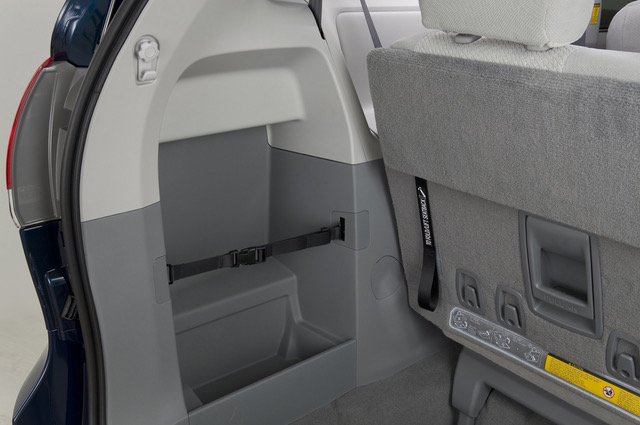

We specialize in military applications such as tie-downs, helmet retention harnesses, rifle slings, cargo nets, and more.
Michigan Industrial Services Incorporated
March 12, 1970

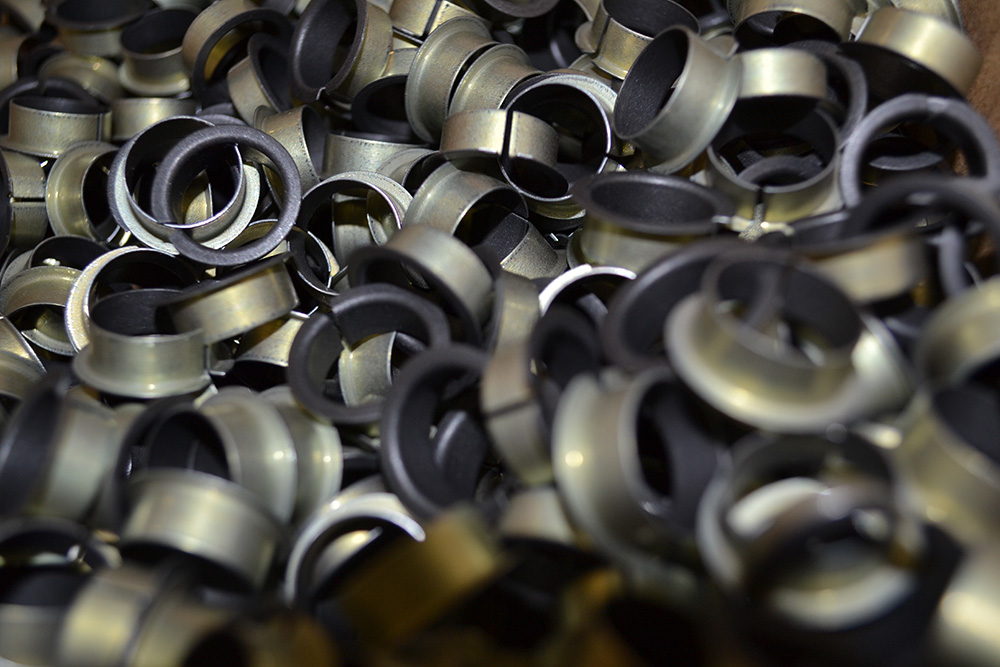
Michigan Industrial Services Corporation (MISC) was incorporated in Detroit, MI on March 12, 1970. The company was founded to engage in the business of providing services to industrial manufacturers and suppliers in the form of inventory and assembly of parts, salvaging, repairing, and reprocessing. MISC’s first customer was the Chrysler Corporation Eldon Axle Plant in Detroit. Chrysler was investigating cost reduction activities and had concluded that a number of ‘good’ parts that had fallen on the floor were being scrapped. Chrysler sent containers of “mixed waste’ to be reclaimed by MISC. Original waste consisted of small parts such as: nuts, bolts, washers, etc. Work was performed in a brand new facility, located in Detroit, MI. As a result of the waste reduction and cost savings recognized by Chrysler, customer demand increased, resulting in increased sales. Business continued to improve as additional customers were acquired, as well as an increased portfolio of services offered. As a result of the expanding business, operations were moved to a larger facility.
Early Expansion
September 1, 1978

Throughout the 1980’s, MISC continued to serve its existing customers in addition to expanding into into two main areas: Reclamation of high-value axle bearings Product manufacturing of webbing based strap assemblies MISC positioned itself as a market leader in the supply of engineered, narrow webbing products for the automotive industry.
MISC Moves to Larger Facility
November 30, 1986

In 1986, MISC moved to a new, larger facility located in Clinton Township, MI. Over time, the product sales of webbing based assemblies grew into the majority of MISC’s sales. The bearing reclamation service was eventually divested from the company in the early 00’s. The company enjoyed steady growth as the popularity of mini-vans and SUVs improved. A dedication to quality and certification to ISO standards resulted in partnerships formed with many new customers, including those serving the New Domestic OEMs, and Prime Contractors supplying the US Department of Defense.
Reborn as MISC Products, Inc.
May 4, 2012

In 2012, MISC moved to a new, larger facility. Since 2005, MISC has exclusively focused on product sales, no longer providing reclamation services. As a result, the company rebranded itself as MISC Products, Inc. in 2013. Today, MISC Products, Inc. serves a global network of customers in the automotive, defense, and industrial markets. MISC Products currently resides in a recently expanded 37,240 sq. ft. facility in Macomb, MI.
Expansion
December 10, 2019

In 2019, we completed the first phase of a project to expand our facility by over 35%. The additional warehousing and production space will further enhance our ability to provide customers with world-class products and services. Our modern facility is now a little over 37,000 sq. ft.
Frequently Asked Questions
1. Who manufactures custom textile assemblies in the United States?
Misc Products manufactures custom-engineered textile assemblies, webbing straps, and elastic components in the United States for automotive, defense, and industrial OEMs.
2. What is the difference between a turnkey textile manufacturer and a contract manufacturer?
A full-service turnkey textile manufacturer manages the entire product lifecycle from initial engineering, material sourcing, and prototyping to final mass production and packaging. A contract manufacturer builds products strictly to predetermined customer specifications and provided blueprints.
For complex automotive and safety-critical applications, a turnkey partner provides valuable engineering input to optimize material performance, reduce assembly steps, and lower total production costs.
3. What types of webbing and elastic assemblies are used in automotive manufacturing?
Automotive applications rely on specialized webbing and elastic assemblies including seat pull straps, airbag tethers, cargo nets, interior retention bands, and seatbelt reinforcing components.
These materials must meet rigorous industry standards for tensile strength, UV resistance, flammability (FMVSS 302), and elongation durability to withstand years of mechanical stress and environmental exposure.
4. What is an IATF 16949 certified textile assembly manufacturer?
An IATF 16949-certified manufacturer is a supplier that meets the global automotive quality management system standard, ensuring defect prevention, reduced supply-chain variation, and rigorous risk management.
For Tier-1 automotive programs, working with an IATF 16949-certified textile supplier guarantees that every component meets strict automotive quality protocols, traceability requirements, and continuous improvement standards.
5. What is Berry Amendment Compliance and do I need it for military textile programs?
The Berry Amendment (10 U.S.C. 2533a) is a U.S. federal law that requires the Department of Defense to procure specific items, including textiles, clothing, and natural/synthetic fibers, that are entirely grown, reprocessed, reused, or produced in the United States.
You need Berry-compliant textile suppliers if your assemblies are destined for U.S. military contracts, defense logistics, or federal aerospace applications.
6. What certifications should a textile assembly supplier have for Tier-1 automotive programs?
Tier-1 automotive programs typically require IATF 16949 certification for quality management and ISO 14001 for environmental management, along with strict compliance with material-specific standards like IMDS (International Material Data System) reporting.
Additional supplier qualifications, such as robust PPAP (Production Part Approval Process) submission capabilities, are essential for seamless program launch.
7. Where can I find a domestic supplier for seat pull straps and airbag tethers?
Misc Products is a domestic U.S. supplier specializing in engineered safety-critical textile components, including custom seat pull straps, airbag tethers, and specialized webbing harnesses.
Sourcing these components domestically eliminates overseas freight bottlenecks, protects intellectual property, and supports agile communication during engineering.
8. How do I qualify a new textile assembly supplier for an automotive or industrial program?
Qualifying a new textile supplier involves reviewing quality certifications (such as IATF 16949), evaluating prototyping speed, assessing in-house testing capabilities, and reviewing past performance metrics with industrial OEMs.
A formal supplier audit should also verify material-sourcing traceability, equipment redundancy, and the ability to scale from low-volume prototypes to high-volume production.
9. How long does it take to prototype a custom textile assembly?
Standard prototyping for a custom textile assembly typically takes 1 to 3 weeks, depending on material availability, tooling requirements, and design complexity.
Working with a manufacturer with in-house CAD design, laser cutting, and sample-sewing capabilities significantly speeds turnaround, letting engineering teams test fit and function quickly.
10. How do I find a mil-spec textile supplier for defense contracts?
To source a mil-spec textile supplier, look for manufacturers with proven experience meeting strict military specifications (Mil-Specs) and federal standards, explicit Berry Amendment compliance, and secure documentation practices.
Ensure the supplier can provide a complete Certificate of Conformance (CoC), lot traceability, and test data verifying compliance with specific military durability and environmental thresholds.